

Your teeth can last a lifetime — but only if you protect them. Every year, millions of Americans lose teeth not from accidents, but from something almost entirely preventable: cavities and tooth decay.
Here is the truth that many patients do not hear until it is too late — a cavity does not hurt until it has already done serious damage. By the time you feel that sharp sting of pain, the decay has likely reached deep into your tooth. The good news? You have more power than you think to stop cavities before they ever start.
This guide from Alta Loma Dental Care in Rancho Cucamonga, CA, walks you through everything you need to know about how to prevent cavities and tooth decay — from daily habits to professional care — so you can keep your smile strong, healthy, and pain-free for years to come.
What Is Tooth Decay and How Does It Start?
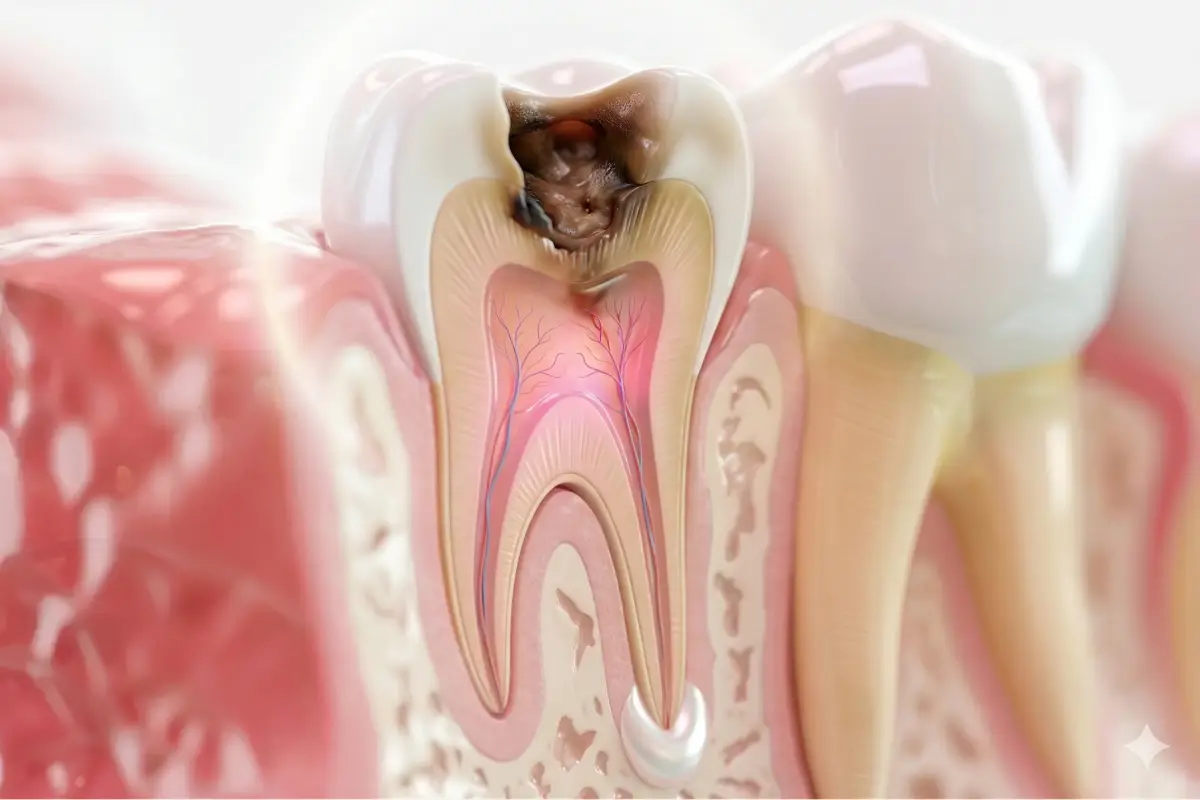
Tooth decay is the breakdown of your tooth’s hard outer surface, called enamel. It happens when bacteria in your mouth feed on sugars and starches from the food you eat. As they digest those foods, they release acid — and that acid slowly eats away at your enamel.
Over time, this acid attack creates a soft spot in the enamel. That soft spot becomes a hole, which is what your dentist calls a cavity (also called dental caries).
Here is how the process works, step by step:
- Plaque forms. Every day, a sticky film of bacteria called plaque builds up on your teeth.
- Plaque feeds on sugar. When you eat or drink anything sugary or starchy, the bacteria in plaque produce acid within minutes.
- Acid attacks enamel. This acid can weaken and dissolve the minerals in your enamel, beginning the decay process.
- Decay spreads. If not treated, decay moves past the enamel into the softer layer underneath (called dentin), and eventually into the nerve and pulp of the tooth.
- Infection and pain follow. Once decay reaches the pulp, you may need a root canal or even a tooth extraction if the damage is too severe.
The key thing to understand is that tooth decay is a slow process — one that you can interrupt and reverse in its earliest stages with the right habits and professional care.
Who Is at Risk for Cavities?
Anyone with teeth can get cavities. But some people are at higher risk than others. You may be more likely to develop tooth decay if you:
- Eat or drink sugary or acidic foods and beverages frequently
- Do not brush and floss regularly or thoroughly
- Have a dry mouth (low saliva production)
- Have deep grooves or pits in your teeth where bacteria hide
- Wear braces or other dental devices that make cleaning harder
- Have had cavities before — they increase your future risk
- Are a child or a senior adult
- Smoke or use tobacco products (learn more about how smoking affects oral health)
- Take medications that reduce saliva flow
- Eat before bed without brushing afterward
- Have gum recession that exposes the roots of your teeth
Knowing your risk level helps you take the right steps to protect your smile. Your dentist at Alta Loma Dental Care can assess your personal risk during a routine dental exam and cleaning.
Top Ways to Prevent Cavities and Tooth Decay
Preventing cavities and tooth decay is not complicated — but it does require consistency. These are the most effective strategies recommended by dental professionals:
1. Brush Twice a Day with Fluoride Toothpaste
Brushing is your first line of defense against tooth decay. Brush your teeth at least twice a day — once in the morning and once before bed — for two full minutes each time.
Use a fluoride toothpaste. Fluoride is a natural mineral that strengthens enamel and helps reverse very early signs of decay. It is one of the most proven tools in cavity prevention.
Tips for effective brushing:
- Use a soft-bristled toothbrush to avoid wearing down enamel
- Hold your brush at a 45-degree angle to the gum line
- Brush all surfaces — front, back, and chewing surface of each tooth
- Replace your toothbrush every 3 to 4 months or when bristles fray
2. Floss Every Single Day
Brushing alone misses about 35% of your tooth surfaces — the areas between your teeth where your brush cannot reach. This is where cavities often start.
Flossing removes plaque and food particles from between your teeth and just below the gum line. Do it once a day, preferably before bed.
If traditional floss is difficult to use, try:
- Floss picks
- Water flossers (water picks)
- Interdental brushes
3. Use a Fluoride Mouthwash
An antibacterial, fluoride-containing mouthwash adds another layer of protection. It kills bacteria that cause decay, strengthens enamel, and reaches areas that brushing and flossing may miss.
Use it after brushing and flossing — but wait at least 30 minutes after brushing so you do not rinse away the fluoride from your toothpaste.
4. Cut Back on Sugar and Acidic Foods
What you eat has a direct effect on your cavity risk. Every time you eat sugar, you give plaque bacteria the fuel they need to make tooth-damaging acid.
It is not just about how much sugar you eat — it is also about how often you eat it. Sipping on a sugary drink all day is far worse for your teeth than eating something sweet at one meal.
Foods and drinks that increase your cavity risk include:
- Soda, energy drinks, and sports drinks
- Fruit juices (even 100% natural ones are high in sugar)
- Candy, especially sticky or hard candy
- White bread, crackers, and chips
- Citrus fruits eaten in excess
5. Drink More Water — Especially Fluoridated Tap Water
Water is one of the best things you can drink for your teeth. It rinses away food particles and bacteria, and it helps keep your mouth hydrated — which is important for saliva production.
If you live in Rancho Cucamonga, your tap water contains fluoride, which helps prevent tooth decay every time you take a sip. Choosing tap water over soda or juice throughout the day is a simple but powerful habit.
6. Chew Sugar-Free Gum After Meals
When you cannot brush after eating, chewing sugar-free gum is a helpful substitute. It stimulates saliva flow, which naturally washes away food debris and neutralizes acid.
Look for gum with the ADA Seal of Acceptance and made with xylitol, a natural sweetener that has been shown to reduce the bacteria that cause cavities.
Download the Checklist: Prevent Cavities and Tooth Decay
The Role of Diet in Cavity Prevention
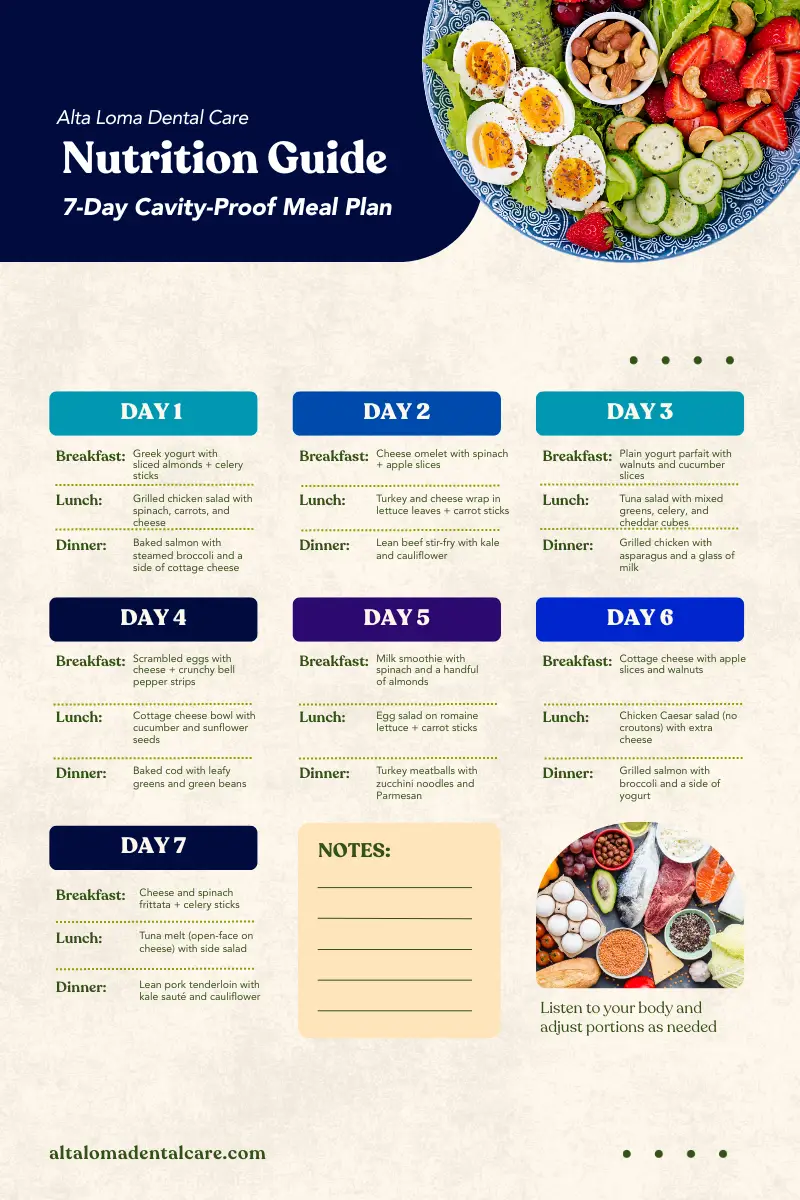
Your diet plays a bigger role in preventing cavities and tooth decay than most people realize. Here is what to eat more of — and what to limit.
Foods That Help Protect Your Teeth
- Dairy products (milk, cheese, yogurt) — High in calcium and phosphate, which help remineralize enamel. Cheese also raises the pH in your mouth, reducing acid.
- Leafy greens — Rich in calcium and folic acid, which support healthy gum tissue.
- Crunchy fruits and vegetables (apples, carrots, celery) — Their fibrous texture naturally scrubs your teeth and stimulates saliva flow.
- Nuts and seeds — Provide minerals like phosphorus and calcium that strengthen enamel.
- Lean proteins (chicken, eggs, fish) — Contain phosphorus, which is essential for strong teeth.
Foods and Habits to Limit
- Reduce sugary snacks between meals — save sweets for mealtimes when saliva production is higher
- Avoid sipping on acidic or sugary drinks throughout the day
- Do not brush immediately after eating acidic foods (wait 30 minutes — acid temporarily softens enamel)
- Try not to eat or drink anything other than water after your nighttime brushing
Best Oral Hygiene Habits to Prevent Tooth Decay
Good oral hygiene is the foundation of cavity prevention. Beyond brushing and flossing, these daily habits make a real difference:
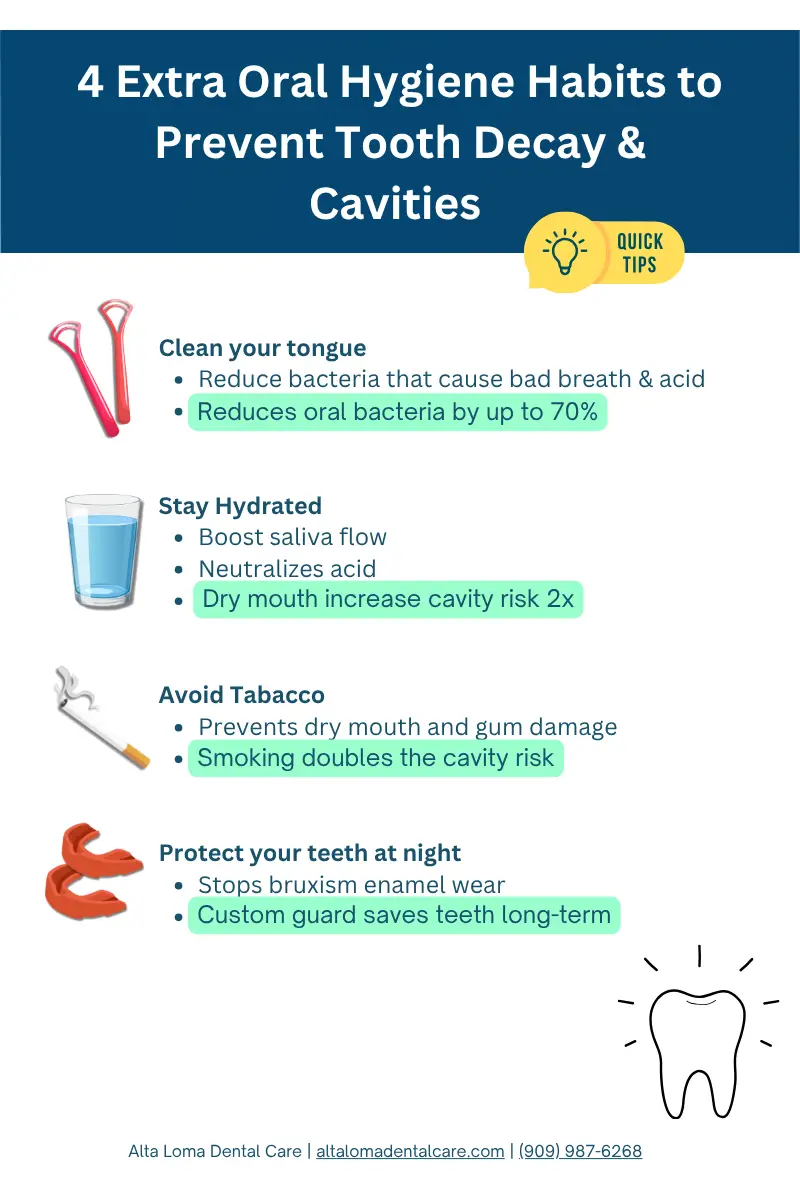
Clean Your Tongue
Bacteria do not just live on your teeth — they coat your tongue too. Using a tongue scraper or gently brushing your tongue each morning removes bacteria that contribute to bad breath and acid production.
Stay Hydrated
A dry mouth is a serious risk factor for cavities. Saliva is your mouth’s natural defense system — it neutralizes acid, remineralizes enamel, and washes away food particles. If you have chronic dry mouth (a condition called xerostomia), talk to your dentist about solutions.
Avoid Tobacco Products
Smoking and chewing tobacco significantly increase your risk of cavities, gum disease, and oral cancer. Tobacco products dry out the mouth, reduce saliva, and damage gum tissue, creating the perfect environment for decay to thrive. You can read more about how smoking affects oral health on our patient resources page.
Protect Your Teeth at Night
If you grind your teeth at night (a condition called bruxism), you may be wearing down enamel faster than normal. Ask your dentist about a custom night guard to protect your teeth while you sleep.
How Professional Dental Care Helps Prevent Cavities
Home care is essential, but it is not enough on its own. Professional dental visits are a critical part of preventing cavities and tooth decay. Here is what regular dental care does for you:
Dental Exams and Cleanings
Even the most careful brusher leaves plaque behind in hard-to-reach spots. Over time, plaque hardens into tartar (also called calculus), which cannot be removed by brushing — only a dental professional can remove it.
During your dental exam and cleaning at Alta Loma Dental Care, our team will:
- Remove plaque and tartar buildup from all surfaces of your teeth
- Check every tooth for early signs of decay, often before you feel any pain
- Take digital X-rays when needed to detect cavities between teeth and under existing restorations
- Polish your teeth to remove surface stains and smooth enamel surfaces
The American Dental Association recommends visiting your dentist at least twice a year for most patients. Those at higher risk for cavities may need more frequent visits.
Dental Sealants
Dental sealants are thin, protective coatings painted onto the chewing surfaces of the back teeth (molars and premolars). These teeth have deep grooves that are difficult to clean and are the most common place for cavities to form.
Sealants fill in those grooves, creating a smooth surface that is much easier to brush and far less hospitable to bacteria. They are especially beneficial for children, but adults can benefit from them too.
Fluoride Treatments
Professional fluoride treatments deliver a higher concentration of fluoride than what is found in toothpaste. Applied as a gel, foam, or varnish, they strengthen enamel and can even help reverse the earliest stage of decay.
These treatments are quick, painless, and can be done during your regular cleaning appointment.
Fillings and Restorations
If a cavity has already formed, catching it early makes a big difference. Small cavities can often be treated with a simple composite tooth-colored filling — a quick, comfortable procedure that restores the tooth and stops the decay in its tracks.
Leaving a cavity untreated allows the decay to grow deeper and more expensive to treat, potentially requiring a crown, a root canal, or even an extraction.
Special Considerations: Children, Seniors, and Dry Mouth
Preventing Cavities in Children
Children are at especially high risk for tooth decay. Their enamel is thinner, their brushing is often incomplete, and they tend to eat more sugar. To protect your child’s teeth:
- Begin brushing as soon as the first tooth appears
- Use a rice-sized amount of fluoride toothpaste until age 3, then a pea-sized amount from 3 to 6
- Limit juice and sugary drinks, especially from bottles or sippy cups
- Take your child to the dentist by age 1 or when their first tooth appears
- Ask about dental sealants for their permanent molars
Preventing Cavities in Seniors
As we age, the risk for tooth decay often increases because of dry mouth (caused by many common medications), receding gums that expose vulnerable root surfaces, and existing restorations that can break down over time.
Seniors should maintain regular dental visits, use fluoride products, and stay hydrated throughout the day.
Managing Dry Mouth
Saliva is critical for preventing tooth decay — it washes away bacteria, neutralizes acid, and remineralizes enamel. If you have dry mouth due to medications, health conditions, or other causes:
- Sip water frequently throughout the day
- Chew sugar-free gum or suck on sugar-free lozenges to stimulate saliva
- Use an alcohol-free mouth rinse
- Ask your dentist about prescription fluoride toothpaste or dry mouth products
Warning Signs You May Already Have a Cavity
Even with great oral hygiene, cavities can sometimes sneak up on you. Here are the signs that something may be wrong:
- Tooth sensitivity — pain or discomfort when eating something sweet, hot, or cold
- Toothache — persistent or sharp pain in a tooth, even without a clear trigger
- Visible holes or pits in a tooth when you look in a mirror
- Dark spots or staining on the surface of a tooth
- Pain when you bite down on food
- Bad breath or a bad taste that does not go away after brushing
If you notice any of these signs, do not wait. Cavities do not heal on their own — they only get worse. The sooner you come in for a dental exam, the simpler and less expensive the treatment is likely to be.
How Alta Loma Dental Care Can Help
At Alta Loma Dental Care, located at 7283 Carnelian St, Rancho Cucamonga, CA 91701, we believe the best dental treatment is the one you never need because we helped you prevent the problem in the first place.
Our team is dedicated to providing personalized, compassionate care that helps every patient in the Rancho Cucamonga area maintain a healthy, cavity-free smile. Here is how we support you:
Comprehensive Exams and Preventive Cleanings
Our thorough dental exams and cleanings are designed to catch problems early and keep your teeth clean between visits. We use digital X-rays and careful visual examinations to detect even the earliest signs of decay.
Tooth-Colored Fillings and Restorations
If a cavity is found, we offer natural-looking composite fillings and restorations that blend seamlessly with your smile. We prioritize saving as much of your natural tooth structure as possible.
Crowns and Bridges for Severely Damaged Teeth
When decay has progressed significantly, we may recommend a dental crown or bridge to restore the strength and appearance of your tooth.
Root Canal Therapy
If decay has reached the inner pulp of your tooth, a root canal can save the tooth and relieve your pain — often in just one or two visits.
Patient Education and Personalized Prevention Plans
We do not just treat problems — we teach you how to prevent them. During every visit, our team takes time to review your brushing technique, talk through your diet, and give you a personalized plan for keeping your teeth healthy between appointments.
Note: This article is for informational purposes only and does not substitute professional dental advice.