
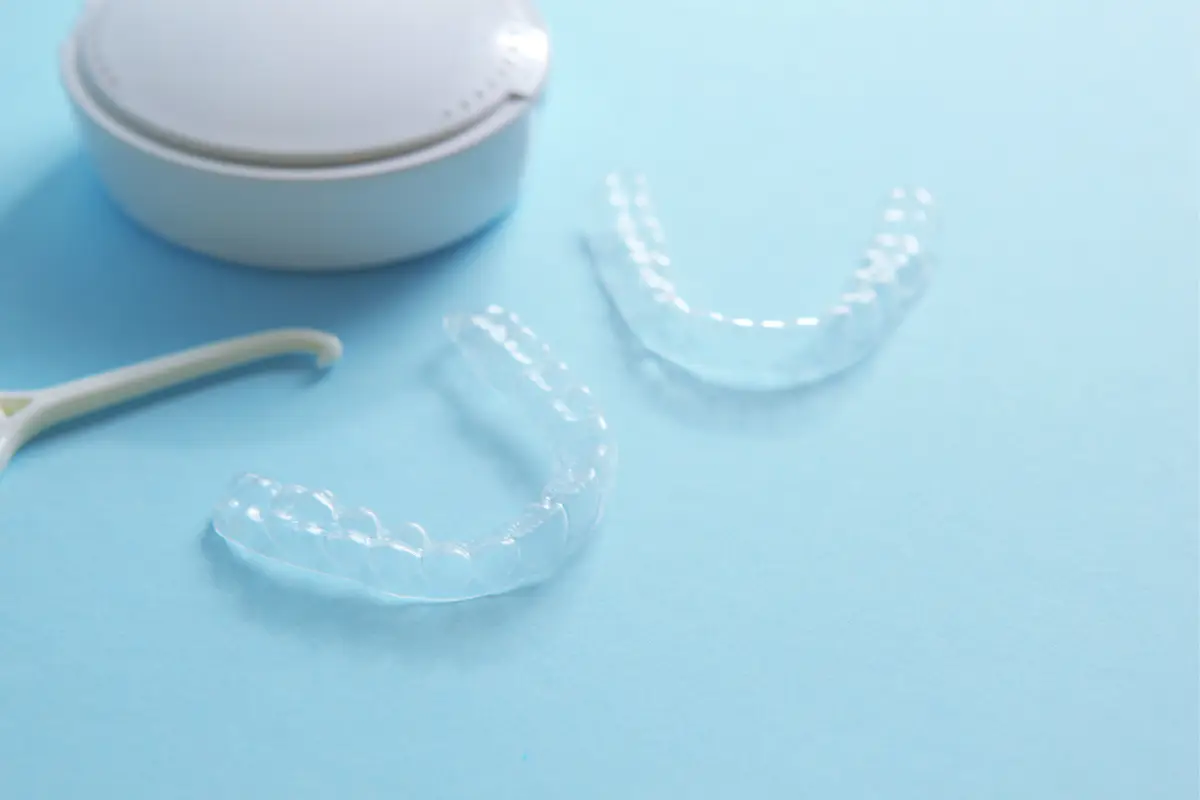
Did you know that your clear aligners can collect harmful bacteria in as little as 6 to 12 hours? That means every time you skip a cleaning
You are putting thousands of bacteria right back into your mouth — sitting against your teeth and gums for up to 22 hours a day.
The good news? Knowing how to clean clear aligners the right way takes just a few minutes and can protect your smile, speed up your recovery, and save you from costly problems down the road.
At Alta Loma Dental Care, we want every patient who is going through aligner treatment to feel confident and supported. This guide will walk you through everything you need to know — from daily cleaning steps to deep cleaning methods, to what you should never do. Let’s keep your aligners crystal clear and your smile on track.
Why Cleaning Your Clear Aligners Matters
Before we get into the “how,” it helps to understand the “why.”
Your clear aligners fit snugly over your teeth. This tight seal is what makes them so effective at moving your teeth into place. But it also creates a warm, moist environment that bacteria love. Without proper cleaning:
- Plaque and tartar build up on your aligners and teeth
- Bad breath develops from trapped bacteria and food particles
- Staining and cloudiness make your aligners visible instead of invisible
- Gum disease and cavities can develop, slowing down your entire treatment
- Poor-fitting aligners from buildup may not move your teeth as planned
In short, dirty aligners work against you. Clean aligners work for you.
What You Need to Clean Clear Aligners
You do not need expensive tools or fancy products. Here is a simple starter list:
- A soft-bristle toothbrush (keep this one separate — do not use your regular toothbrush)
- Clear, unscented antibacterial soap (no dye, no fragrance)
- Lukewarm water (never hot)
- Aligner cleaning tablets or crystals (such as Invisalign Cleaning Crystals)
- A clean container or cup for soaking
- Your aligner case (use it every single time you take your aligners out)
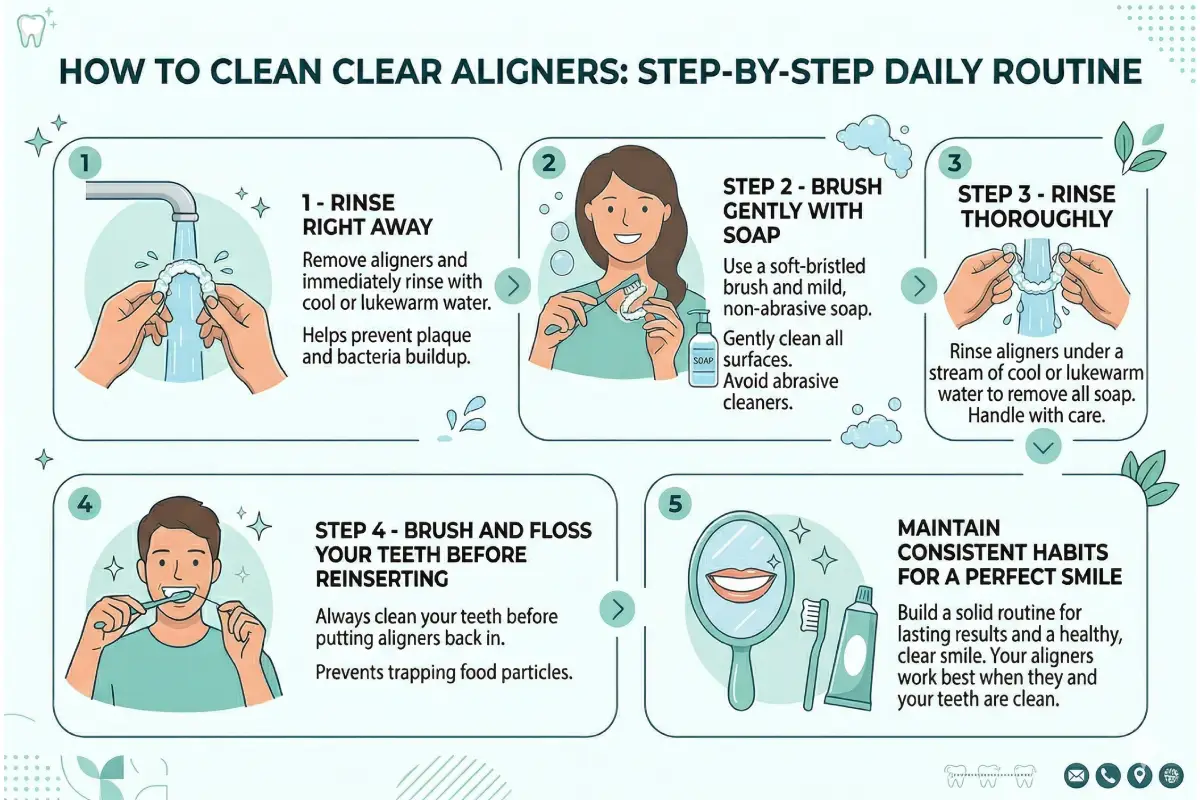
How to Clean Clear Aligners: Step-by-Step Daily Routine
Consistency is the key. A solid daily cleaning habit takes only a few minutes and makes a big difference for your recovery and results.
Step 1 — Rinse Right Away
Every single time you remove your aligners, rinse them immediately under lukewarm water. This washes away fresh saliva and plaque before they have a chance to dry and stick to the surface.
Do not use hot water. Clear aligners are made from thermoplastic material. Hot water can warp the shape of your aligners, changing how they fit and reducing their ability to move your teeth correctly.
Step 2 — Brush Gently with Soap
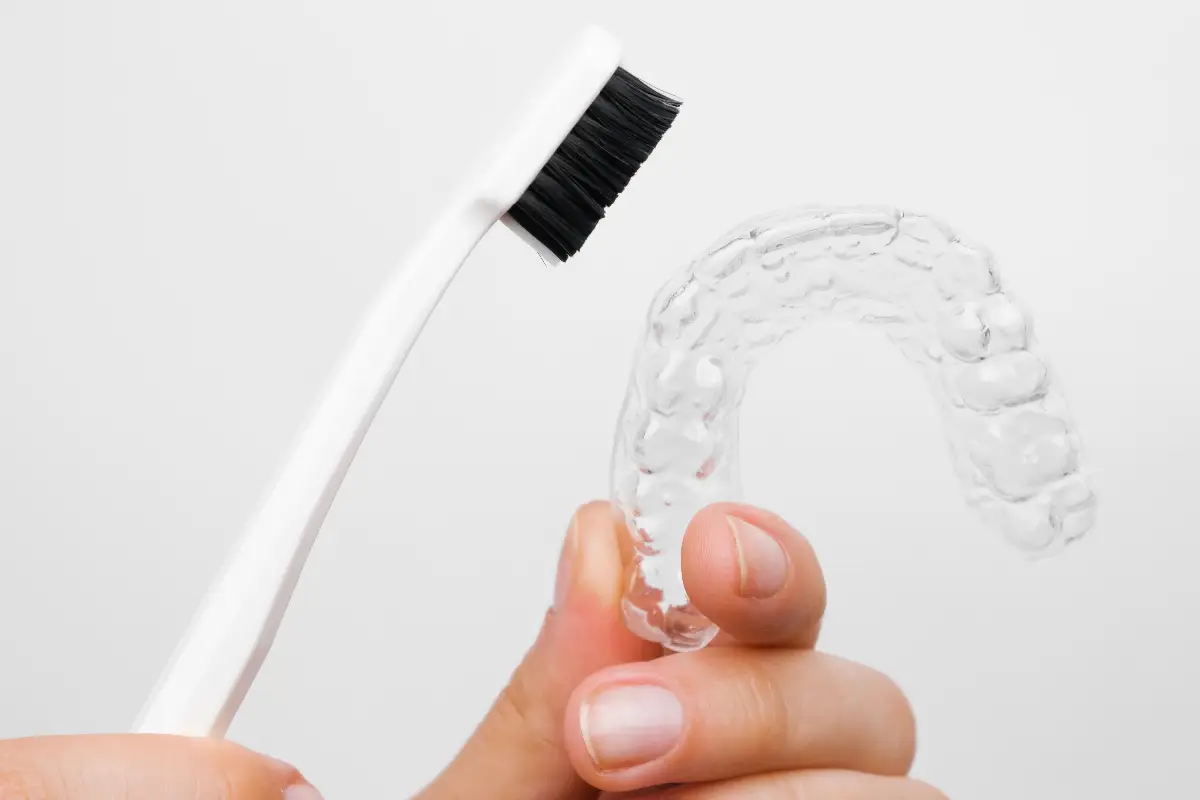
Use your dedicated soft-bristle toothbrush and a small amount of clear, unscented antibacterial liquid soap to gently scrub your aligners.
- Brush the inside and the outside of each tray
- Be gentle — do not scrub hard
- Work the brush into the grooves and edges
Do not use regular toothpaste. Most toothpastes contain tiny abrasive particles that can scratch the surface of your aligners. These scratches trap bacteria and make your aligners appear cloudy and dull.
Step 3 — Rinse Thoroughly
After brushing, rinse your aligners well under lukewarm water to remove all soap and debris. Any leftover soap can cause an unpleasant taste in your mouth.
Step 4 — Brush and Floss Your Teeth Before Reinserting
Always brush and floss your teeth before putting your aligners back in. This is one of the most important habits you can build. Putting clean aligners onto unclean teeth traps food particles and bacteria underneath them, which accelerates decay.
Step 5 — Store in Your Case When Not Wearing Them
When you are eating, drinking, or sleeping without your aligners, keep them in their case. Leaving aligners on a counter or wrapped in a napkin exposes them to dust, bacteria, and the risk of loss or accidental damage.
How to Deep Clean Clear Aligners (Weekly)
In addition to your daily cleaning routine, it is important to do a deeper clean at least once a week. This removes any stubborn buildup and keeps your aligners odor-free and clear.
Method 1 — Aligner Cleaning Crystals or Tablets (Best Option)
Products like Invisalign Cleaning Crystals are specifically made for clear aligners.
- Dissolve the crystals or tablet in a cup of lukewarm water
- Place your aligners in the solution
- Soak for 15 to 20 minutes
- Remove and gently brush away any loosened debris
- Rinse thoroughly with lukewarm water before reinserting
These are considered one of the safest and most effective cleaning methods available.
Method 2 — White Vinegar Soak
White distilled vinegar is a natural disinfectant and a budget-friendly option.
- Mix equal parts white vinegar and lukewarm water
- Soak your aligners for 15 to 30 minutes
- Rinse very thoroughly afterward (vinegar has a strong taste)
Note: Ask your dentist if this method is right for your specific aligners before trying it.
Method 3 — Hydrogen Peroxide Soak
Hydrogen peroxide is a strong antibacterial agent. When diluted properly, it can be used to disinfect your aligners.
- Mix one part hydrogen peroxide with one part lukewarm water
- Soak for 15 to 30 minutes
- Rinse completely before putting your aligners back in
Important: Use only 3% hydrogen peroxide (the standard pharmacy variety). Do not use a concentrated version. Check with your dental provider before using this method.
Morning, Afternoon, and Night: A Sample Daily Schedule
Making aligner cleaning part of your existing routine makes it much easier to stay consistent. Here is a simple schedule to follow:
Morning
- Remove aligners
- Rinse aligners under lukewarm water
- Brush aligners with soap
- Rinse aligners thoroughly
- Brush and floss your teeth
- Reinsert clean aligners
Midday (After Eating)
- Remove aligners before eating
- Store in your case while eating or drinking
- Rinse your mouth and brush your teeth if possible
- Rinse aligners and reinsert
Night (Before Bed)
- Remove aligners
- Brush and floss your teeth thoroughly
- Brush aligners with soap
- Rinse aligners well
- Optional: Soak in cleaning solution while you brush and floss
- Rinse after soaking and reinsert before sleep
Download the Free Daily Fridge Checklist on How to Clean Clear Aligners –
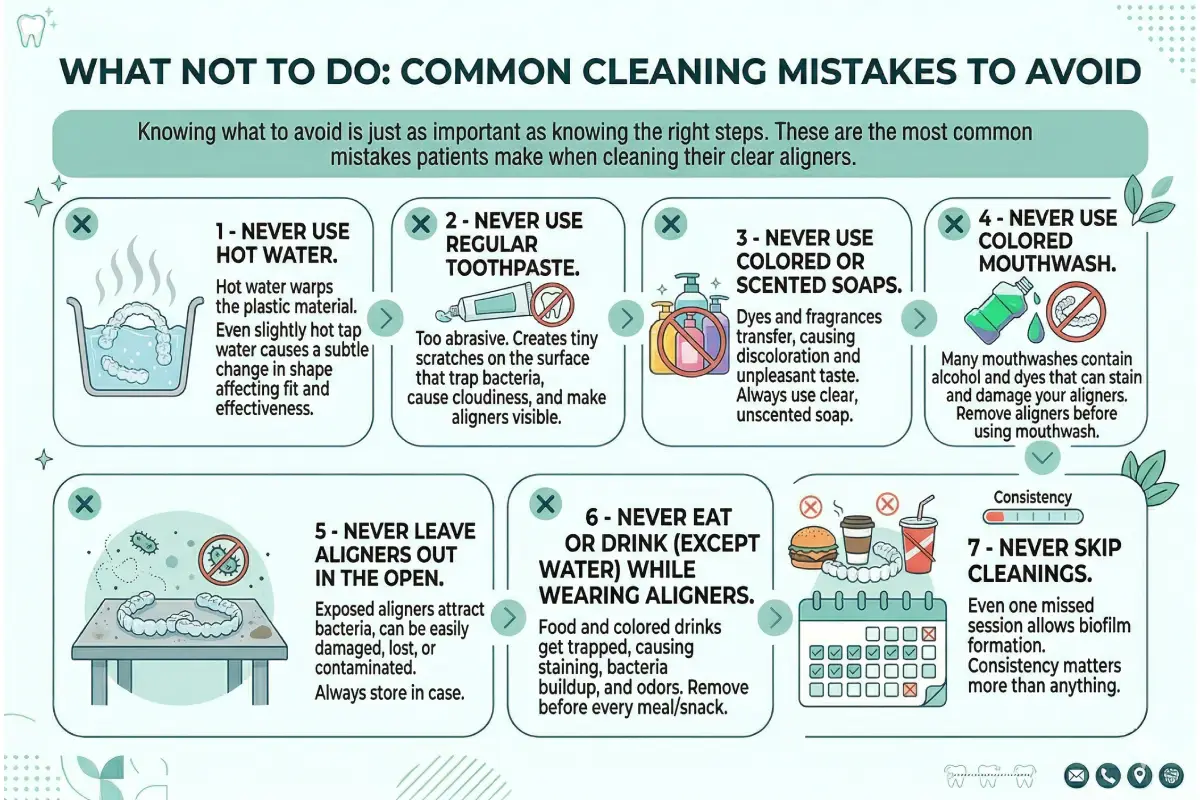
What NOT to Do: Common Cleaning Mistakes to Avoid
Knowing what to avoid is just as important as knowing the right steps. These are the most common mistakes patients make when cleaning their clear aligners.
❌ Never Use Hot Water
Hot water warps the plastic material of your aligners. Even slightly hot tap water can cause a subtle change in shape that affects how your aligners fit — and how effectively they move your teeth.
❌ Never Use Regular Toothpaste
Toothpaste is too abrasive for clear aligners. It creates tiny scratches on the surface that trap bacteria, cause cloudiness, and make your aligners more visible.
❌ Never Use Colored or Scented Soaps
Dyes and fragrances in soaps can transfer to your aligners, causing discoloration and an unpleasant taste. Always use a clear, unscented soap.
❌ Never Use Colored Mouthwash
Many mouthwashes contain alcohol and dyes that can stain and damage your aligners. If you want to use mouthwash, remove your aligners first.
❌ Never Leave Aligners Out in the Open
Always store your aligners in their protective case when not in use. Exposed aligners attract bacteria and can be easily damaged, lost, or contaminated.
❌ Never Eat or Drink (Except Water) While Wearing Aligners
Food and colored drinks get trapped under your aligners, causing staining, bacteria buildup, and bad odors. Remove your aligners before every meal and snack.
❌ Never Skip Cleanings
Even one missed cleaning session can allow bacteria to begin forming a biofilm on your aligner surface. Consistency matters more than anything else.
How Often Should You Clean Your Clear Aligners?
| Task | Frequency |
|---|---|
| Rinse with lukewarm water | Every time you remove aligners |
| Brush with soap | Morning and night |
| Soak in cleaning solution | At least once per week |
| Clean your aligner case | 2 to 3 times per week |
| Professional dental check-up | As scheduled by your provider |
Cleaning Your Aligner Case Too
Your aligner case can also become a breeding ground for bacteria if it is not cleaned regularly. Wash your case with antibacterial soap and warm water two to three times per week. Allow it to air dry completely before closing it. Never store your aligners in a dirty case.
Traveling With Clear Aligners
Life does not stop during aligner treatment. Here is a simple travel kit to keep you on track:
- A dedicated travel toothbrush (for your aligners only)
- A travel-size bottle of clear unscented soap
- Aligner cleaning tablets (easy to pack, just add water)
- Your aligner case (never wrap aligners in tissue or napkins)
- Dental floss or floss picks
- Alcohol-free, clear mouthwash
Even when you are away from home, the basics still apply: rinse, brush with soap, and always store your aligners in their case.
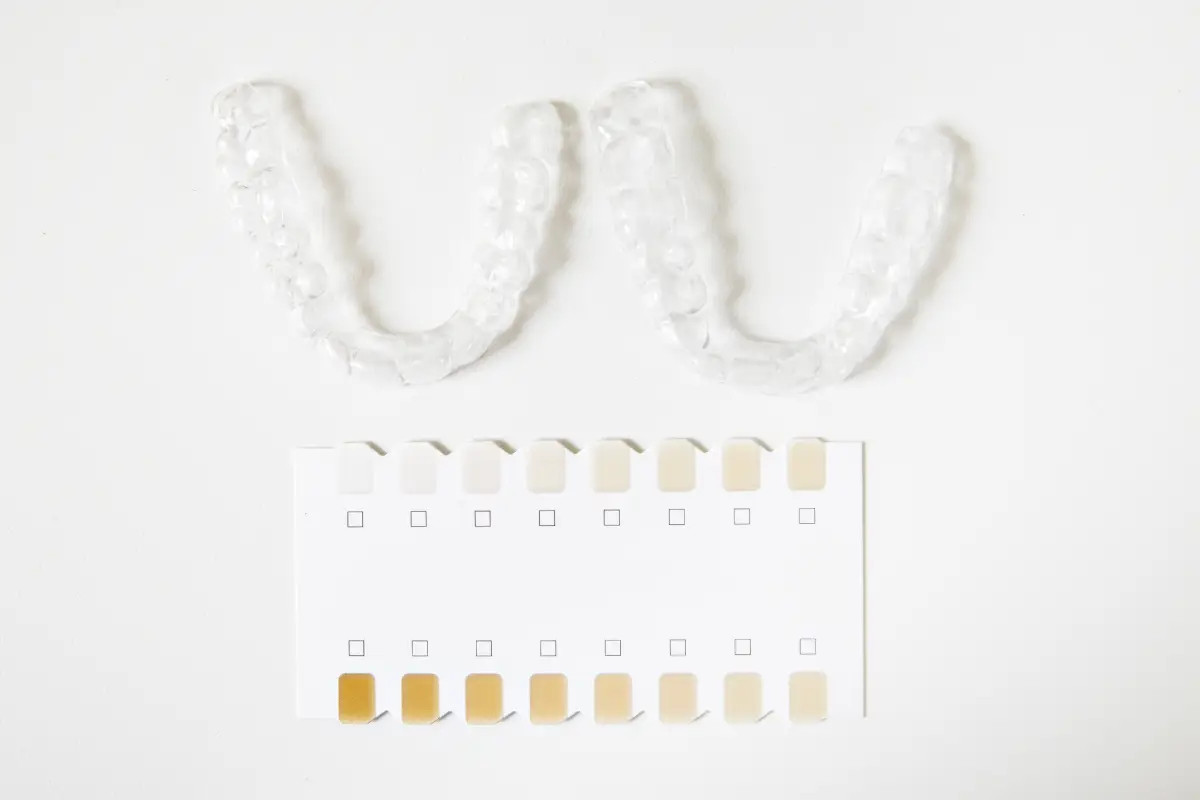
Signs Your Aligners Need Extra Attention
Watch for these warning signs that your cleaning routine may need improvement:
- Cloudy or yellow appearance — buildup of bacteria and plaque
- Persistent bad taste or smell — bacteria have settled on the surface
- Visible white spots or residue — mineral deposits or plaque
- Aligners feel rough to the touch — possible scratching from abrasive products
- Gum irritation or increased tooth sensitivity — bacteria under the aligners may be affecting your gums or enamel
If you notice any of these issues, contact your dental provider. At Alta Loma Dental Care, our team is happy to guide you through better cleaning habits and check your aligner fit.
How Clean Aligners Help You Recover Faster
Keeping your aligners clean is not just about appearance — it is directly connected to how well and how quickly your treatment works.
When your aligners are clean and clear of buildup, they:
- Fit properly against your teeth, applying the right pressure to move them effectively
- Prevent oral health setbacks like cavities and gum disease that could pause your treatment
- Maintain their shape longer, reducing the risk of needing replacement trays
- Keep your mouth comfortable and free from irritation
Simply put, a clean aligner is an effective aligner. The few minutes you invest each day in proper cleaning directly protects your investment in your smile.
When to Call Your Dentist
Reach out to your dental provider if you experience:
- Cracks, chips, or damage to your aligners
- Aligners that no longer fit snugly over your teeth
- Persistent gum soreness or bleeding around aligner edges
- Visible darkening or permanent discoloration of your aligners
- Any discomfort that does not improve within a few days
Your dental team can assess your aligners and determine whether you need a replacement tray or an adjustment to your treatment plan.
A Note About Oral Health During Aligner Treatment
Clear aligner treatment is closely connected to your overall oral health. Poor oral hygiene during treatment can cause problems that go beyond your aligners — including enamel erosion, gum inflammation, and increased risk of decay.
Just as we discuss in our patient resources on how smoking affects oral health, habits that you maintain during your treatment period have a lasting impact on the health of your teeth and gums. Smoking, for example, can stain your aligners rapidly and increase the risk of gum disease — which can slow or even interrupt your aligner treatment.
We encourage all of our aligner patients to make oral health a daily priority — not just for the duration of their treatment, but for life.
Conclusion: A Simple Routine Makes a Big Difference
Learning how to clean clear aligners does not require fancy products or a lot of time. It requires consistency and the right approach. Here is your simple summary:
- Rinse every time you remove your aligners
- Brush with clear, unscented soap morning and night
- Soak with aligner cleaning crystals weekly
- Brush and floss your teeth before reinserting
- Store in your case every time they leave your mouth
- Avoid hot water, toothpaste, colored soaps, and eating while wearing aligners
Stick to this routine and your aligners will stay clear, comfortable, and effective — helping you reach your smile goals as quickly as possible.
Note: This article is for informational purposes only and does not substitute professional dental advice.